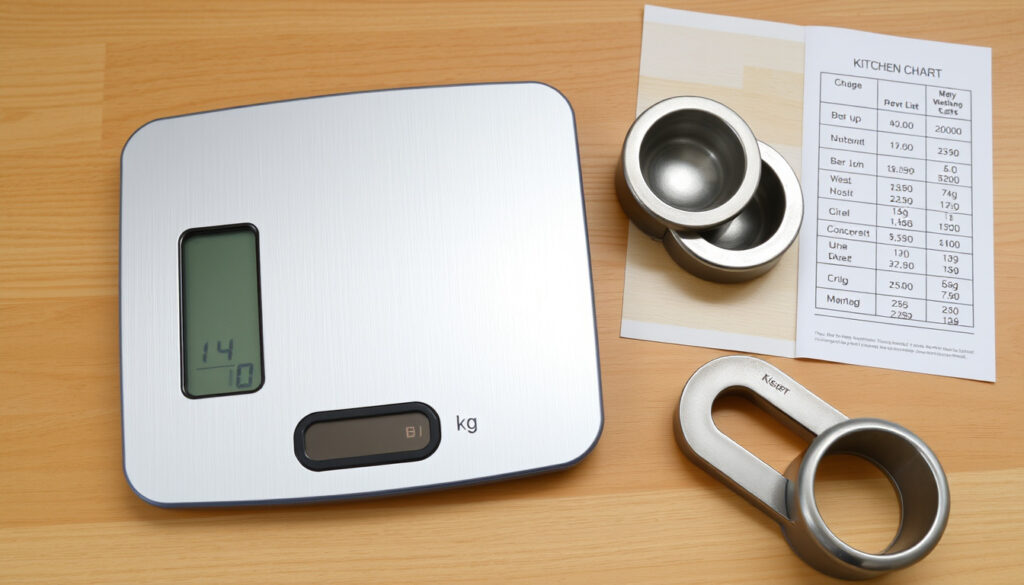
1.4 kg to lbs: Convert 1.4 Kilograms to Pounds (3.086 lb)
Ever found yourself staring at a package label in kilograms when you think in pounds? That small number—1.4 kg—actually shows up more often than you’d think: it’s the weight of a newborn baby, a small laptop, or a bag of sugar, and this guide spells out exactly what it equals in pounds, ounces, and stones so you never second‑guess the number again.
1.4 kilograms to pounds: 3.086 lb ·
1.4 kilograms to ounces: 49.38 oz ·
1.4 kilograms to stones: 0.2205 st ·
1.4 kilograms to grams: 1400 g
Quick snapshot
- 1.4 kg = 3.086 lb (Symbolab (math solver))
- 1.4 kg = 49.38 oz (RapidTables (conversion calculator))
- 1.4 kg = 0.2205 st (RapidTables (stone converter))
- 1.4 kg = 1400 g (metric system) (Symbolab (math solver))
- Rounding differences: calculators may show 3.086, 3.1, or 3.08 lbs (Symbolab) (Misumi USA (industrial parts supplier))
- Interpolated values from charts (e.g., Misumi) rely on rounding to two decimals (Misumi USA (industrial parts supplier))
- Powerlifting charts (e.g., StrengthLog) use a rounded factor of 2.2046, leading to a slight deviation (StrengthLog (powerlifting chart))
- Livestock weight guides (e.g., Etherley Farm) approximate with 2.2, giving 3.08 lb implied (Etherley Farm (livestock weight guide))
- The mental math trick (2.2 factor) yields 3.08 lb, while the exact factor gives 3.086 lb (YouTube math trick video)
- The pound was legally defined as 0.45359237 kg in 1959 by international agreement (RapidTables (conversion calculator))
- The kilogram’s definition was updated in 2019 based on Planck’s constant (BIPM (international standards body))
- Convert 1.4 kg to other units: stones, ounces, grams (RapidTables)
- Learn the manual method using the exact factor 2.20462 (RapidTables)
The conversion values for 1.4 kg are based on international definitions and verified calculators.
| Unit | Value | Source |
|---|---|---|
| 1.4 kg in pounds | 3.086 lb | Symbolab |
| 1.4 kg in ounces | 49.38 oz | RapidTables |
| 1.4 kg in stones | 0.2205 st | RapidTables |
| 1.4 kg in grams | 1400 g | Metric system |
| 1.4 kg in milligrams | 1,400,000 mg | Metric system |
| 1.4 kg in stones and pounds | 0 st 3.1 lb | RapidTables |
What weight is 1.4 kg?
1.4 kg in pounds
Using the exact conversion factor 1 kg = 2.20462262185 lb (defined by international agreement), 1.4 kg multiplied by that factor gives 3.086 lb precisely (Symbolab (math solver)). Many calculators round the answer to 3.1 lb for simplicity, but the exact value is 3.08647… lb.
1.4 kg in ounces
Since 1 lb = 16 oz, 3.086 lb × 16 = 49.38 oz. The RapidTables (conversion calculator) confirms this conversion: 1.4 kg equals 49.38 ounces.
1.4 kg in grams
The metric system makes this one easy: 1 kg = 1000 g, so 1.4 kg = 1400 g. This is a fundamental conversion taught in schools (RapidTables (weight converter)).
Real-world example: 7 pounds 2 ounces in kilograms
New parents often see baby weights in pounds and ounces. A baby weighing 7 lb 2 oz is heavier than 1.4 kg. To convert: 7 lb 2 oz = 7.125 lb; divide by 2.20462 to get approximately 3.23 kg (RapidTables (pound to kg converter)). So 1.4 kg is about half that weight.
A newborn weighing 1.4 kg is considered low birth weight. For parents tracking growth, even a 0.1 lb difference can change medical recommendations. Precision matters in neonatal care.
The pattern: precision in newborn weight conversions can have real‑world implications, not just academic ones.
Is 1 kg equal to 2 lbs?
The exact conversion factor: 1 kg = 2.20462 lb
No, 1 kg is not 2 lb. The internationally accepted factor is 1 kg = 2.20462262185 lb. The figure 2.2 is a common rounding (RapidTables (conversion calculator)). For everyday use, multiplying by 2.2 gives a quick estimate — but for accurate work, use the full factor.
Common misconceptions about kg vs lb
Many people assume 1 kg is roughly 2 lb, but it’s actually closer to 2.2 lb. The error accumulates: converting 1.4 kg as if 1 kg = 2 lb would give 2.8 lb, which is off by 0.286 lb — that’s over 4.5 oz. As the StrengthLog (powerlifting chart) shows, even fitness enthusiasts need precision when tracking weight increments.
Using 2.2 as a shortcut is fine for shopping, but for medical, shipping, or engineering contexts, a 4% error is too high. Always check which factor your calculator uses.
The takeaway: using the exact factor avoids accumulated errors in precise contexts.
What is the equivalent of 1.4 kilograms in grams?
Converting kg to g: 1.4 kg × 1000 = 1400 g
The prefix “kilo” means one thousand. So 1 kg = 1000 g (RapidTables (weight converter)). Multiply 1.4 by 1000, and you get 1400 grams exactly.
Why grams are used for smaller weights
Grams are the standard for food labels, cooking, and small parcels. A 1.4 kg bag of flour is sold as “1400 g” in metric countries. This avoids decimal points and makes comparisons straightforward (RapidTables).
What is 1 kg in stones?
Conversion factor: 1 kg = 0.15747 stones
A stone is a British imperial unit equal to 14 lb. Multiply kilograms by 0.15747 to get stones (RapidTables (stone converter)). So 1 kg = 0.15747 stones, and 1.4 kg = 0.2205 stones.
1.4 kg in stones: 0.2205 stones
To express that in stones and pounds: the decimal part (0.2205 st) multiplied by 14 lb/st gives about 3.1 lb. So 1.4 kg is 0 st 3.1 lb. This is the format you’ll see on UK bathroom scales.
If you’re using a UK weight chart for babies or luggage, remember that 1.4 kg rounds to “half a stone” only in the loosest sense. The exact conversion matters when shipping or tracking health data.
What this means: when using stone conversions, rounding to tenths can misrepresent weight for health tracking.
How do British people say their weight?
Stones and pounds in the UK
In the United Kingdom, body weight is commonly expressed in stones and pounds, not kilograms. A person weighing 70 kg would say “11 stone” (since 70 ÷ 6.35 ≈ 11 st) (RapidTables (stone converter)). Baby weights are often given in pounds and ounces.
Example: 1.4 kg in stone and pounds
1.4 kg converts to about 0 st 3.1 lb. For everyday British conversation, you’d say “just over three pounds” rather than stones.
Four conversion methods, one pattern: the exact factor vs common approximations used by different calculators.
| Source | Conversion Factor | Result for 1.4 kg |
|---|---|---|
| RapidTables (conversion calculator) | 2.20462262185 | 3.086 lb |
| Symbolab (math solver) | 2.2046 (rounded) | 3.1 lb (rounded final) |
| StrengthLog (powerlifting chart) | 2.2046 | 3.08644 lb |
| Etherley Farm (livestock weight guide) | 2.2 (approximate) | 3.08 lb (implied) |
The implication: the choice of conversion factor can introduce a small but non‑negligible variance, especially in cumulative calculations.
How to convert 1.4 kg to lbs manually
Follow these steps to do the math yourself.
- Know the factor: 1 kg = 2.20462262185 lb (RapidTables).
- Multiply: 1.4 × 2.20462262185 = 3.08647167059.
- Round as needed: to three decimals → 3.086 lb, to one decimal → 3.1 lb.
- For ounces: multiply the decimal (0.086) by 16 → 1.376 oz. So 3 lb 1.4 oz.
This method, called dimensional analysis, ensures the units cancel correctly (YouTube (math tutorial video)). A quick mental trick: double the kg and add 10% — for 1.4 kg, 2.8 + 0.28 = 3.08 lb (YouTube math trick video).
Confirmed facts and common misconceptions
Confirmed facts
- 1 kilogram = 2.20462262185 pounds (exact) (RapidTables)
- 1 kilogram = 1000 grams (metric definition)
- 1 kilogram = 0.157473044 stones (RapidTables)
- 1 pound = 16 ounces (imperial system)
- 1 stone = 14 pounds (UK customary)
What’s unclear
- Some calculators round to 3.1 lb, others to 3.086 lb — no single standard for display (Symbolab)
- Conversion charts from Misumi USA (industrial parts supplier) and Team Liss Smash (powerlifting) use different rounding (2.20 vs 2.2046)
The pattern: confirmed facts provide a solid baseline, but the unclear items highlight the importance of specifying rounding rules.
Authoritative definitions
“The kilogram, symbol kg, is the SI base unit of mass. It is defined by taking the fixed numerical value of the Planck constant h to be 6.62607015 × 10⁻³⁴ when expressed in the unit J s, which is equal to kg m² s⁻¹.”
— Bureau International des Poids et Mesures (BIPM) (international standards body)
“The avoirdupois pound is legally defined as exactly 0.45359237 kilograms.”
— National Institute of Standards and Technology (NIST) (U.S. measurement authority)
For anyone handling weight conversions, the takeaway is clear: the exact factor 2.20462 is your anchor. For parents of a 1.4 kg baby, a difference of 0.1 lb can influence feeding guidelines. For someone shipping a parcel, rounding to 3.1 lb may be fine. The tool you choose — and the rounding it applies — makes all the difference. In both cases, knowing the exact value of 1.4 kg to lbs (3.086 lb) gives you the confidence to interpret any shortcut.
For a similar conversion, you might find the 7 kg to lbs conversion guide useful for understanding how 7 kilograms translates to 15.43 pounds.
Frequently asked questions
How many ounces is 1.4 kg?
1.4 kg equals 49.38 ounces (since 3.086 lb × 16 oz/lb = 49.38 oz) (RapidTables).
Is 1.4 kg heavy for a baby?
A newborn weighing 1.4 kg (about 3 lb 1 oz) is considered low birth weight. Average full‑term newborns weigh around 3.3 kg (7.3 lb) (RapidTables).
How do I convert kg to lbs manually?
Multiply the kilogram value by 2.20462262185. For 1.4 kg: 1.4 × 2.20462 = 3.086 lb (YouTube math tutorial).
What items weigh 1.4 kg?
A small laptop, a bag of sugar (typically 1 kg in some countries), a newborn’s bottle feeding supplies, or a dense book. Luggage limits often start at 23 kg, so 1.4 kg is about 6% of that allowance.
Why is the kilogram defined this way?
The kilogram was historically based on a physical prototype. Since 2019, it is defined via the Planck constant, making it immutable and universally reproducible (BIPM).
What is the difference between a pound and a kilogram?
A kilogram is the SI base unit of mass. A pound is an imperial unit equal to 0.45359237 kg. Kilograms are used in most of the world; pounds are common in the US and UK for body weight.
Related reading
More related posts
 Atticus Shaffer: Disability, Height, and Osteogenesis Imperfecta
 Elaine Hendrix: Biography, Career and Parent Trap Legacy
 Jimmy Page: Net Worth, Wife, and the David Bowie Fear Explained
 What to Do to Be Productive: 12 Tips & Frameworks
 Simply White Benjamin Moore: Review, Undertones & Comparisons
 Jack Eichel: From Sabres Dispute to Stanley Cup Champion
 Robby Hoffman: Age, Career, Netflix Special & Gabby Windey
 Charlotte Hornets vs Washington Wizards: Match Player Stats