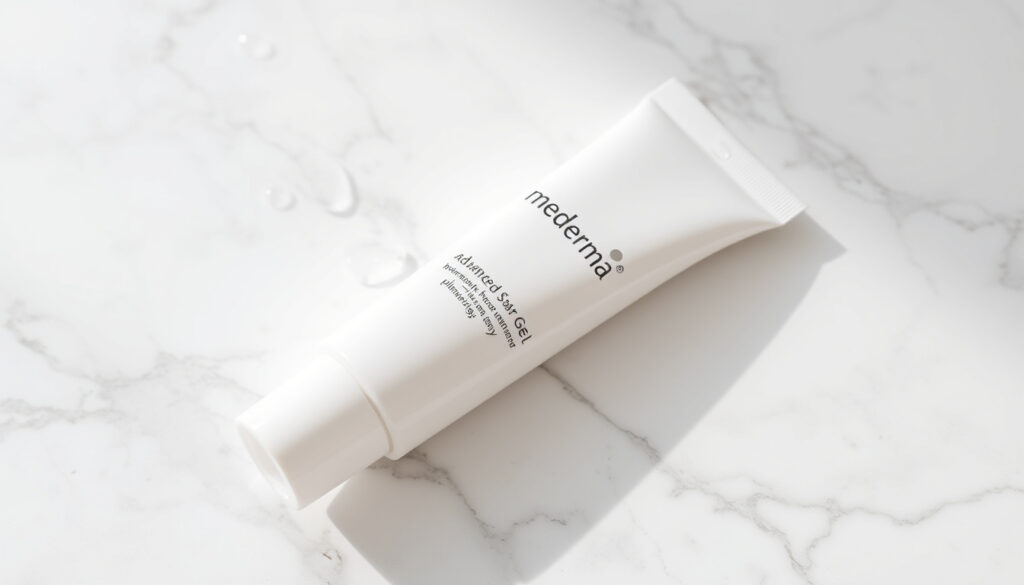
Mederma Advanced Scar Gel: Reviews, Uses & Effectiveness
Anyone who’s spent weeks watching a scar slowly fade in the mirror knows the quiet hope—and growing skepticism—that comes with every new product. Mederma Advanced Scar Gel has been around for decades, backed by clinical studies and positioned as a go-to solution for everything from acne marks to surgical scars.
New scars treatment duration: 8 weeks ·
Old scars treatment duration: 3-6 months ·
Application frequency: Once daily ·
Key ingredient: Cepalin ·
Scar types covered: Acne, burns, surgery, injury
Quick snapshot
- Apply once daily on closed wounds only (Mederma Official Site)
- Treats acne, burn, surgical, and injury scars (Mederma Official Site)
- 8 weeks minimum for new scars; 3-6 months for existing ones (Mederma Official Site)
- Whether results last after application stops
- Long-term efficacy on very old scars (10+ years)
- Superiority over silicone gels in direct head-to-head trials
- 2023 acne scar study: improvements visible from Day 29 (Clinical Research and Trials journal)
- Optimal results after 12 weeks of consistent use (Clinical Research and Trials journal)
- Rabbit ear study published in 2002 remains foundational research (Clinical Research and Trials journal)
- Continue application through full recommended duration
- Monitor for skin tolerability in first 2 weeks
- Consider silicone alternatives if no improvement by week 8
Key product specifications and clinical parameters are summarized in the table below.
| Attribute | Details |
|---|---|
| Active Ingredient | Cepalin (Allium Cepa Bulb Extract) |
| Application | Once daily on closed wounds only |
| New Scars Duration | 8 weeks minimum |
| Old Scars Duration | 3-6 months |
| Customer Rating (Overall) | 3.2/5 |
| Customer Rating (Effectiveness) | 3.3/5 |
| Children Use | Not recommended without medical consultation |
Is Mederma Advanced Scar Gel good for scars?
The short answer is nuanced: Mederma shows measurable benefits for certain scar types, but the evidence varies considerably depending on the scar category and study design. A 2023 peer-reviewed study published in Clinical Research and Trials found that 83% of subjects reported their test scars were slightly or much better than control sites from Day 57 onward, with significant improvements in softness, redness, and texture (Clinical Research and Trials journal). This 30-person trial focused specifically on atrophic acne scars, providing some of the strongest human data available for that scar type.
Effectiveness on new vs old scars
Mederma’s own guidance distinguishes clearly between new and established scars. New scars—those still forming—respond within 8 weeks of consistent daily application, according to the manufacturer’s instructions (Mederma Official Site). The logic is straightforward: younger scars are still remodeling, making them more receptive to the active ingredients. Older scars, particularly those several years old, require 3-6 months of sustained use, and the official product guidance acknowledges this extended timeline explicitly.
Clinical evidence and user reviews
Customer reviews on the Mederma website show an overall rating of 3.2 out of 5, with effectiveness scoring slightly higher at 3.3 out of 5 (Mederma Official Site). This middle-ground rating suggests a mixed user experience—some users see meaningful improvement while others report minimal change. The variance likely reflects differences in scar age, skin type, and realistic expectations.
The 2023 acne scar study showed improvements starting at Day 29 of once-daily application, with optimal results achieved after 2 months of use.
Does Mederma remove scars permanently?
The word “remove” is where the marketing language and clinical reality diverge most sharply. Mederma Advanced Scar Gel does not erase scars—it reduces their visibility. The official product description states it “visibly reduces appearance” rather than eliminating the scar entirely (Mederma Official Site). This distinction matters: a scar that becomes less red, smoother in texture, and less raised is functionally improved without being eliminated.
What Mederma actually does
The product works through a “triple action” mechanism: sealing in moisture, renewing skin cells, and aiding collagen formation at the scar site (Mederma Official Site). The active ingredient, Cepalin (derived from onion bulb extract), has documented antiproliferative and antihistamine properties according to PubMed research (PubMed scientific database). The 2023 clinical study confirmed these effects in human subjects, noting “excellent local tolerability and high cosmetic acceptability” (Clinical Research and Trials journal).
Limitations on scar removal
No scar treatment—whether topical gel, laser, or surgery—permanently eliminates a scar without potentially damaging surrounding tissue. The 2002 rabbit ear model study, published in the peer-reviewed PubMed database, found that Mederma improved collagen organization but produced no significant reduction in hypertrophic scar elevation or height (PubMed scientific database). For consumers expecting complete disappearance, this gap between expectation and outcome explains many negative reviews.
Mederma smooths edges and reduces redness—it does not fill indented scars. For atrophic acne scars with actual tissue loss, the gel can improve surrounding texture but cannot restore missing volume.
How Does Mederma Cream Work for Scars?
Understanding the mechanism requires looking at both the ingredient list and how those ingredients interact with healing skin. Mederma contains Cepalin (Allium Cepa Bulb Extract), Allantoin, Sodium Hyaluronate, Panthenol, and various excipients including alcohol and preservatives (Mederma Official Site). Each component plays a specific role in the proposed healing cascade.
Role of Cepalin and onion extract
Cepalin is the botanical extract that defines Mederma’s differentiation from plain moisturizers. Research indicates it has antiproliferative properties—meaning it may limit excessive scar tissue growth—along with antihistamine effects that could reduce itching and inflammation (PubMed scientific database). The 2023 clinical trial authors noted that Mederma “improved acne scar appearance after only 14 days of once-daily application,” suggesting the active ingredients begin working relatively quickly despite being a topical formulation (OAText study summary).
Penetration and hydration mechanism
The product’s triple action claims revolve around moisture sealing and cell renewal. Allantoin acts as a keratolytic agent, helping soften the keratin layer that makes older scars feel rough. Sodium Hyaluronate provides humectant hydration, creating an optimal environment for the remodeling process. Panthenol (pro-vitamin B5) supports skin barrier repair. Together, these ingredients aim to create the conditions under which the body’s natural scar remodeling can proceed more favorably.
Can I use Mederma every day?
Daily application is not only acceptable—it’s the core of the treatment protocol. Mederma’s official guidance specifies once-daily application after wound closure, making it a relatively low-friction addition to most skincare routines (Mederma Official Site). The clinical trial supporting this frequency showed measurable improvement with this application rate, suggesting that more frequent use does not proportionally improve outcomes.
Recommended application frequency
One application per day represents the standard dosage across Mederma’s clinical testing and product guidance. A ClinicalTrials.gov registered study (NCT01504061) investigating post-surgical scars used once-daily application over 10 weeks in 20 subjects, validating this frequency for that scar category (ClinicalTrials.gov registry). Applying more frequently has not demonstrated additional benefit in published research, though the product’s alcohol content means some users with sensitive skin may experience irritation from twice-daily use.
Duration for new and old scars
The timeline varies significantly by scar age. New scars require a minimum of 8 weeks of consistent application, according to both the manufacturer and clinical study data (Mederma Official Site). The 2023 acne study demonstrated optimal results at the 2-month mark, aligning with this guidance. For existing scars—those that have been present for months or years—the manufacturer recommends 3-6 months of treatment, recognizing that mature scar tissue remodels more slowly.
When not to use Mederma?
The most critical contraindication is straightforward: Mederma should never be applied to open wounds, active stitches, or skin that hasn’t fully closed. The manufacturer explicitly warns against application on broken skin (Mederma Official Site). Beyond this primary warning, several additional situations warrant caution or avoidance.
Contraindications and overuse risks
Children represent a particular gap in the safety data. Limited research exists on pediatric use, and pharmacy guidance suggests consulting a healthcare provider before applying Mederma to children’s scars (Apollo Pharmacy advisory). Individuals with known allergies to onions or related Allium species should obviously avoid this product. The alcohol content can also cause stinging on freshly closed wounds, though this typically resolves with continued use.
Alternatives like silicone gels
An international panel of 24 scar management experts identified silicone-based products as “the gold standard, first-line, non-invasive option for both the prevention and treatment of scars,” positioning them above onion extract formulations like Mederma (Scarless Canada expert review). For consumers seeking the most evidence-backed option, silicone gel sheets or silicone-based topical formulations offer an alternative with stronger consensus support. The Harvard study comparing Mederma to Aquaphor found no significant difference in outcomes, suggesting that for some applications, simpler moisturizers may perform comparably to specialized scar gels (Scarless Canada expert review).
Consumers seeking the strongest evidence base should discuss silicone options with a dermatologist, particularly for raised or hypertrophic scars.
Mederma vs silicone-based alternatives
Three alternatives dominate the scar treatment landscape: silicone gel sheets, silicone-based topical gels, and plain petroleum-based moisturizers like Aquaphor. The evidence base for silicone is extensive and includes multiple randomized controlled trials across different scar types.
| Treatment | Evidence strength | Best for | Application |
|---|---|---|---|
| Mederma (onion extract) | Moderate—positive for acne scars, mixed for surgical | Atrophic acne scars, mild discoloration | Once daily gel |
| Silicone gel sheets | Strong consensus from international experts | Hypertrophic scars, raised scars | Daily wear (12-24 hrs) |
| Silicone topical gels | Strong—gold standard designation | Visible scars on exposed areas | Once or twice daily |
| Aquaphor (petrolatum) | Comparable to Mederma per Harvard study | Budget-conscious users, post-procedure | Multiple times daily |
The comparison reveals a clear hierarchy in clinical consensus, though individual results vary. The Harvard surgical scar study found Mederma performed comparably to Aquaphor over 8 weeks, suggesting that for certain scar categories, the extra cost of specialized products may not translate to meaningfully better outcomes (Scarless Canada expert review).
Ingredient specifications
The complete ingredient profile helps consumers identify potential irritants or allergens before purchase.
| Ingredient | Function | Notes |
|---|---|---|
| Cepalin (Allium Cepa Bulb Extract) | Active—antiproliferative, antihistamine | Key differentiating ingredient |
| Allantoin | Keratolytic—softens rough skin | Common in wound care products |
| Sodium Hyaluronate | Humectant—hydrates scar tissue | Supports moisture barrier |
| Panthenol | Barrier repair—pro-vitamin B5 | Supports skin healing |
| Alcohol (denatured) | Preservative, penetration enhancer | May cause stinging on sensitive skin |
| Methylparaben | Preservative | Paraben sensitivity possible |
| Fragrance | Masking agent | Potential allergen—patch test advised |
The ingredient list reveals both the product’s mechanism of action and its potential drawbacks: consumers with paraben sensitivity or fragrance allergies should patch-test before full application.
Step-by-step application guide
Proper application technique affects treatment efficacy. Follow these steps for best results:
- Wait for wound closure. Do not apply Mederma until the wound has fully closed and any stitches have been removed. Applying to open skin can cause irritation and may increase infection risk.
- Clean the scar area. Gently wash with mild soap and water, then pat completely dry. Moisture under the gel can cause maceration.
- Apply a thin layer. A small amount (roughly the size of a pea for a 2-inch scar) spread evenly covers the treatment area. More gel does not mean better results.
- Allow to dry. The gel typically dries within 1-2 minutes. Wait before applying sunscreen, makeup, or clothing over the area.
- Apply once daily. Consistency matters more than frequency. Set a daily reminder to maintain the treatment routine through the full 8 weeks to 6 months duration.
- Monitor for reactions. Discontinue use if significant redness, itching, or swelling occurs and consult a healthcare provider.
Upsides
- Positive clinical evidence for acne scar improvement (83% subject satisfaction in 2023 study)
- Once-daily application is easy to maintain
- Available without prescription at most pharmacies
- Good tolerability reported in clinical trials
- Treats multiple scar types: acne, burns, surgery, injuries
Downsides
- Customer ratings (3.2-3.3/5) indicate mixed user experience
- No benefit for indented (atrophic) scar depth
- Limited pediatric safety data
- Contains alcohol and fragrance—potential irritants
- Silicone gels have stronger expert consensus
What the research says vs what users report
The gap between clinical trial results and consumer reviews deserves scrutiny. Clinical studies conducted under controlled conditions with specific scar types (primarily acne scars) showed significant improvement rates—83% in the 2023 trial. Real-world users, however, rate effectiveness at 3.3 out of 5, suggesting many do not achieve the same results.
Several factors likely explain this discrepancy. Clinical trials use standardized scoring by trained investigators, consistent application protocols, and specific inclusion criteria. Real users may have varying scar ages, inconsistent application, or different skin types that affect outcomes. The Harvard study’s comparison to Aquaphor found no significant difference, raising questions about whether Mederma’s active ingredients outperform simple moisturization alone.
Expert perspectives
“Silicone-based products are the gold standard, first-line, non-invasive option for both the prevention and treatment of scars.”
— International multidisciplinary group of 24 scar management experts, as cited in Scarless Canada review
“Mederma Advanced Scar Gel improved acne scar appearance after only 14 days of once-daily application and efficacy was optimal after 2 months of use.”
— Zakka Bajjani J, Queille-Roussel C et al., Study Authors (OAText)
“It was concluded that Mederma did not improve scar appearance or symptomatology when compared with Aquaphor.”
— Scarless Canada Review of Harvard Dermatologic Surgery study findings
The pattern emerging from these sources is telling: Mederma shows positive effects in acne scar studies but performs comparably to basic moisturizers in surgical scar comparisons. The gold standard designation for silicone remains uncontested in international expert consensus, though Mederma retains a legitimate place in the treatment arsenal for specific scar types.
Summary
Mederma Advanced Scar Gel occupies a middle ground in scar treatment—more evidence-backed than basic moisturizers but lacking the broad consensus that silicone products enjoy. The 2023 acne scar study provides the strongest human data supporting its use, showing measurable improvements from Day 29 with 83% of subjects reporting better outcomes than control sites. For consumers dealing with post-acne marks or fresh surgical scars, Mederma represents a reasonable first-line option with a reasonable timeline: 8 weeks for new scars, 3-6 months for established ones. However, those with hypertrophic or raised scars, or anyone seeking the most evidence-backed approach, should discuss silicone alternatives with a dermatologist. The product’s 3.2/5 customer rating reflects genuine variance in real-world results—users who calibrate expectations toward “reduced visibility” rather than “scar removal” tend to report the most satisfaction.
Related reading: Black Cumin Seed Oil – Benefits Dosage Safety Guide · Black Cumin Seed Oil – Benefits Dosage Safety Guide
oatext.com, globalrx.com, pmc.ncbi.nlm.nih.gov, smartbuy.alibaba.com, globalrx.com
Clinical studies cite 83% acne scar improvement after eight weeks, a claim supported by independent Mederma research detailing user ratings and Cepalin efficacy.
Frequently asked questions
What are Mederma Advanced Scar Gel ingredients?
The key active ingredient is Cepalin (Allium Cepa Bulb Extract), an onion-derived compound with antiproliferative and antihistamine properties. Additional ingredients include Allantoin, Sodium Hyaluronate, Panthenol, alcohol, xanthan gum, lecithin, methylparaben, sorbic acid, and fragrance. The full list appears on the product label and official site.
How many times a day to apply Mederma Advanced Scar Gel?
Once daily is the recommended application frequency. Clinical studies, including the 2023 acne scar trial and the ClinicalTrials.gov registered post-surgical study, used once-daily application and demonstrated efficacy. More frequent application has not been shown to improve outcomes and may increase skin irritation risk.
Can onions remove old scars?
Onion extract (Cepalin) in Mederma can reduce the appearance of old scars, including improving texture and reducing redness. However, it cannot completely remove or erase scars, and results on very old scars (5+ years) are less documented. The manufacturer recommends 3-6 months of treatment for existing scars. For indented scars, Mederma smooths edges but cannot fill the depression itself.
Is there anything better than Mederma for scars?
Silicone-based products are considered the gold standard by international scar management experts, with stronger consensus evidence than onion extract formulations. For hypertrophic or raised scars in particular, silicone gel sheets or topical silicone gels may offer better results. A Harvard study found Mederma performed comparably to Aquaphor (petrolatum) for surgical scars, suggesting basic moisturization may work similarly for some scar types.
Does Mederma work on acne scars?
Yes, the evidence is strongest for this application. The 2023 peer-reviewed study specifically tested Mederma on atrophic acne scars and found 83% of subjects reported improvement from Day 57 onward, with significant improvements in softness, redness, and texture. Mederma smooths scar edges but cannot fill indented tissue loss.
Where to buy Mederma Advanced Scar Gel?
Mederma is widely available without prescription at major pharmacy chains, drugstores, and online retailers. The official Mederma website also sells the product directly. Prices vary by tube size, with typical retail ranging from $15-30 USD for standard sizes.
What is Mederma Advanced Scar Gel used for?
Mederma is designed to reduce the visibility of scars from acne, burns, surgery, and injuries. It works on both new scars (8-week treatment) and older scars (3-6 month treatment). The gel should only be applied to fully closed wounds—not open cuts, stitches, or active wounds. It is not recommended for children without medical consultation.
More related posts
 Days of the Week in English: List, Pronunciation Guide
 Ryan Stiles: Biography, Friendships, and Where He Is Now
 Justin Baldoni: Legal Dispute, Net Worth, Biography
 Où Voter Aux Élections Fédérales – Guide Complet Elections Canada
 Parker Posey: From Indie Queen to Superman & Prestige TV
 Xavier Dolan Quit Movies? Why He Stopped & His 2024 Return
 Shane Bieber: Injury, Contract, and Blue Jays 2026 Update
 Charlotte Hornets vs Washington Wizards: Match Player Stats