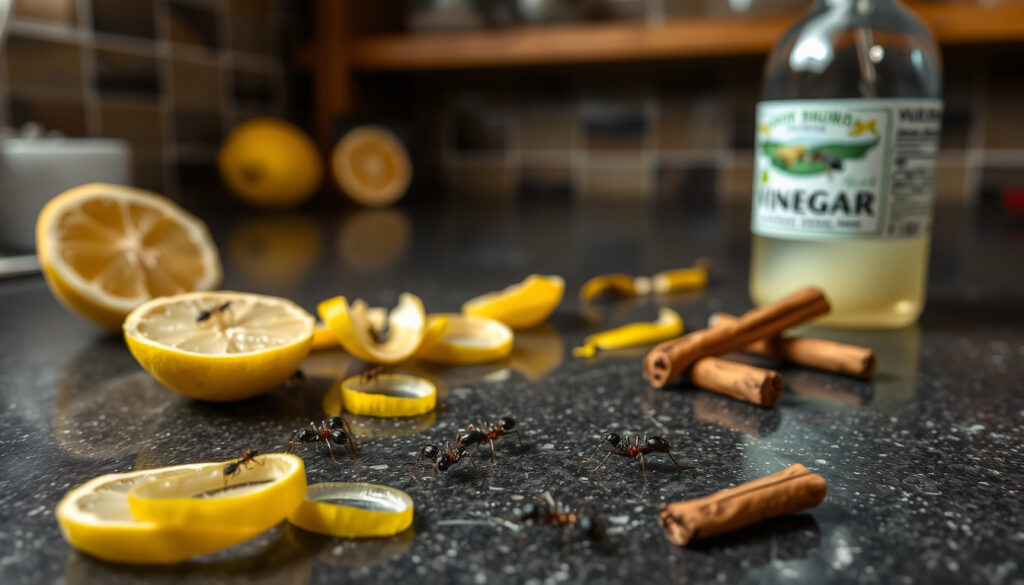
How to Get Rid of Ants – Proven Natural Remedies
Ant infestations rank among the most persistent household pest problems, affecting homeowners across every season and climate. Whether you’re dealing with trails of sugar ants marching across kitchen counters or fire ant mounds disrupting your yard, finding effective solutions matters. This guide covers proven methods ranging from household items you already have to targeted approaches for different ant species, all grounded in available research and practical experience.
Understanding the difference between quick fixes and lasting solutions determines your success rate. Some methods eliminate visible ants immediately while others target colonies to prevent future invasions. The right approach depends on ant type, location, and whether you prefer natural remedies or are willing to use other treatments.
This article examines what actually works, based on documented methods and user reports, to help you choose the most appropriate strategy for your situation.
How to Get Rid of Ants Naturally at Home
Natural remedies offer safer alternatives for households with children and pets, though effectiveness varies by method and consistency of application. Several household items have demonstrated ability to repel or eliminate ants without synthetic chemicals.
Fastest Method
Bait stations deliver results within 1-3 days by targeting the entire colony rather than individual ants.
Natural Option
Combining diatomaceous earth with vinegar disrupts trails and dehydrates ants on contact.
Best for Kitchen
Borax bait stations eliminate sugar ants by carrying poison back to their nest.
Prevention Key
Sealing cracks and immediately cleaning spills stops ants before they establish trails.
Key Takeaways for Natural Ant Control
- Borax baits outperform sprays for long-term colony elimination
- Identifying ant species before treatment improves targeting
- Combining methods increases success rate to approximately 90%
- Consistent daily application accelerates visible results
- Prevention costs less effort than eliminating established infestations
| Method | Time to Work | Safety | Estimated Cost |
|---|---|---|---|
| Vinegar spray | Immediate repellent | High | Under $5 |
| Borax bait | 3-7 days | Moderate | $4/lb |
| Diatomaceous earth | 1-3 days | High (food-grade) | $10/bag |
| Essential oils | Immediate repel | High (diluted) | $5-10/bottle |
| Coffee grounds | Ongoing prevention | High | Near zero |
What Kills Ants Instantly: Fast-Acting Solutions
When ants appear suddenly in large numbers, immediate action prevents them from establishing permanent trails. Several approaches provide rapid results on visible ant populations, though killing individual ants rarely solves the underlying colony problem.
Contact Killers and Sprays
Vinegar solutions work immediately by erasing the scent trails ants use to navigate. Mix equal parts white vinegar and water, then spray directly on ant trails, countertops, and entry points. Repeating this process daily prevents ants from regrouping. Adding essential oils like peppermint or tea tree to the mixture strengthens the repellent effect.
Cornstarch provides another instant solution. Sprinkle it directly on visible ants, then apply water to drown them or vacuum the mixture afterward. This method works best in contained areas like kitchen counters where cleanup is easy.
Understanding Instant Kill Limitations
Instant kill methods only affect visible ants and do not reach the colony. Professional pest control services recommend combining immediate solutions with bait stations that target entire ant populations for lasting results.
For overnight reduction in small infestations, place borax baits near entry points before bed. Ants carry the bait back to their colony overnight, beginning the process of eliminating the source. Larger infestations typically require 1-2 weeks of consistent daily treatment combining multiple methods.
Best Ways to Eliminate Ants in the Kitchen and Yard
Different locations require different strategies. Kitchen infestations typically involve sugar ants seeking food sources, while yard problems usually involve ground-nesting species like fire ants or larger carpenter ants that can damage wooden structures.
Tackling Kitchen Ant Problems
Kitchen ant control begins with eliminating all accessible food sources. Clean countertops with vinegar to remove scent trails, store sweet items in sealed containers, and never leave dishes unwashed overnight. Place borax bait stations away from food preparation areas—under appliances and in corners work well.
Initial increases in ant activity after placing baits indicate the treatment is working. Ants recruit nest mates to the food source, meaning more visible ants initially as they transport bait back to the colony. Colony die-off typically becomes visible within 3-7 days of consistent baiting.
Yard Treatment Strategies
Outdoor ant control requires different approaches due to environmental exposure and larger infestation areas. Sprinkle food-grade diatomaceous earth around garden beds, patio edges, and along foundation walls. Reapply after rain since moisture reduces its effectiveness.
Coffee grounds scattered around yard perimeters and entry points deter ants through strong odor. For fire ant mounds specifically, inverted soda bottles placed over small nests can disrupt colonization over several days. Spreading composted manure around affected areas also discourages fire ant activity according to documented homeowner approaches.
Small black ants indicate sugar ants attracted to sweets. Large black ants suggest carpenter ants that damage wood structures. Red mounds in yard areas typically signal fire ant colonies. Proper identification helps select the most effective treatment method for your specific situation.
Permanent Ant Control: Remedies That Last
Achieving lasting ant control requires addressing the colony, not just individual ants. Borax baits remain among the most thoroughly documented methods for achieving this, with ants carrying poisoned bait back to their nest and spreading it through the population.
Targeting the Colony
The most effective permanent solution combines bait stations with entry point sealing. Locate ant trails to identify entry locations, then apply caulk to cracks and gaps in foundations, around windows, and where utility pipes enter the structure. This prevents new ants from entering while bait stations eliminate the existing population.
For outdoor nests, boiling water poured directly on mounds eliminates visible colonies but may not reach deeper sections. Repeating this process over several days improves results. Professional exterminators use more concentrated treatments for severe outdoor infestations.
Long-Term Prevention Habits
Borax and baking soda pose low risk when placed out of reach of children and pets. Keep bait stations under appliances, behind furniture, and in other locations where curious hands or paws cannot access them. Always wash hands after handling borax products.
Consistent cleaning habits prevent ant reinfestation more effectively than any single treatment. Wipe up spills immediately, store food in airtight containers, take trash out regularly, and address moisture issues like leaking pipes that attract ants seeking water sources. A weekly routine of trail-wiping with vinegar maintains a scent-free environment ants avoid.
How Long Does Ant Treatment Take to Work?
Treatment timelines vary significantly based on infestation severity, chosen methods, and ant species. Understanding these timelines helps set realistic expectations and determines when professional intervention becomes necessary.
- Day 1: Identify ant species and entry points; clean all visible trails and food sources
- Days 2-3: Set bait stations at entry points and along trails; apply barrier treatments
- Days 4-7: Monitor activity increases as bait spreads through colony; maintain daily cleaning
- Week 2: Expect significant reduction in visible ant activity as colony dies off
- Ongoing: Continue prevention habits and seal any new entry points discovered
Mild infestations may clear within one week using consistent bait placement and cleaning. Moderate infestations typically require two weeks of daily attention. Severe or structural infestations involving carpenter ants may take a month or longer, sometimes requiring professional intervention.
What Actually Works vs. What Remains Uncertain
Not all commonly recommended ant remedies have equal scientific support. Understanding what researchers have verified versus what remains anecdotal helps prioritize your treatment approach.
Established Approaches
- Borax baits have documented colony-killing effectiveness
- Vinegar disrupts ant scent trails immediately
- Diatomaceous earth dehydrates ants through exoskeleton abrasion
- Peppermint oil repels Myrmica rubra (European red ants) according to 2020 research
- Cinnamon leaf oil demonstrates kill and repel properties (2008 study, trans-cinnamaldehyde identified as active component)
Approaches Lacking Strong Evidence
- Cinnamon alone as primary treatment remains scientifically unverified
- Neem oil effectiveness based on limited ant-specific research
- Most essential oil claims rely on anecdotal homeowner reports rather than controlled studies
- Yard treatments like inverted bottles show variable results depending on ant species and colony size
Understanding Why Ants Invade Homes
Ants enter structures searching for three essential resources: food, water, and shelter. Understanding this motivation helps homeowners target the root causes rather than just treating symptoms. Seasonal patterns affect invasion frequency, with summer months typically bringing increased ant activity as colonies expand and foragers search more aggressively.
Colonies can contain anywhere from a few hundred to hundreds of thousands of individuals, with only a small percentage actively foraging at any given time. This means visible ants represent a fraction of the actual population. Eliminating foragers without reaching the colony produces temporary results at best.
Different species adapt to various environments. Sugar ants (also called pavement ants) commonly infest kitchens seeking sweet food sources. Carpenter ants tunnel through moist or damaged wood rather than consuming it like termites. Fire ants establish mounds in yards and deliver painful stings when disturbed. Each species requires slightly different treatment approaches for optimal control.
Expert Guidance on Ant Control Methods
University extension services consistently recommend integrated pest management approaches combining sanitation, exclusion, and targeted baiting as the most effective strategy for residential ant control. Chemical sprays alone rarely solve infestations because they kill visible ants without reaching colonies.
EPA guidelines emphasize that prevention costs significantly less than treatment, recommending regular inspection of foundations, proper food storage, and moisture management as foundational ant control practices for homeowners.
Healthline reports that natural remedies like vinegar, diatomaceous earth, and essential oils can effectively manage ant populations without the health risks associated with synthetic pesticides, particularly important in homes with children, pets, or individuals with chemical sensitivities.
Your Action Plan for Ant-Free Living
Effective ant control combines immediate action with long-term prevention. Start by identifying the ant species and entry points in your home. Apply bait stations immediately, focusing on areas where ant trails are visible. Clean all surfaces with vinegar to eliminate scent markers that guide other ants.
Seal identified entry points within the first week while monitoring bait effectiveness. If ant activity decreases within 7-10 days, continue the same approach while maintaining prevention habits. Persistent infestations after two weeks of consistent treatment may require professional evaluation for hidden nests or structural entry points.
For ongoing protection, conduct regular inspections using reverse Google image search to identify any new ant species that appear, maintain cleaning routines, and address moisture or food access points before infestations establish. Prevention remains significantly easier than elimination for most ant species.
Frequently Asked Questions About Ant Control
What is the best ant killer for home use?
Borax-based bait stations rank among the most effective options for most household ant species. They offer lower toxicity than professional pesticides while still eliminating entire colonies rather than just visible ants.
How do I get rid of carpenter ants permanently?
Carpenter ant control requires targeting both visible foragers and hidden nests. Seal entry points, apply diatomaceous earth around wooden structures, and use essential oil sprays outdoors. Severe carpenter ant infestations may require professional treatment due to potential structural damage.
What kills fire ants naturally?
Lemon eucalyptus oil and tea tree oil repel fire ants on contact. Spreading composted manure around mounds disrupts their habitat. For severe fire ant problems, professional-grade treatments may be necessary despite their non-natural classification.
Does baking soda actually kill ants?
Yes, baking soda kills ants when mixed with sugar and placed where ants forage. Ants ingest the mixture, and the baking soda reacts with their stomach acids, eliminating them over time. This approach works best as part of a broader treatment strategy.
What scents do ants hate most?
Vinegar, citrus, peppermint, and cinnamon scents repel ants effectively. These strong odors disrupt their navigation and make treated areas less attractive. Regular reapplication maintains effectiveness as scents fade over time.
How do I find where ants are entering my house?
Follow ant trails from their visible endpoints backward to identify entry points. Common locations include gaps around windows, cracks in foundations, spaces around utility pipes, and gaps in door frames. Place bait stations at these entry points for maximum effectiveness.
Can I get rid of ants without killing them?
Non-lethal approaches focus on exclusion and repellence rather than elimination. Seal all entry points, apply strong-smelling repellents like peppermint oil around perimeters, and maintain immaculate food storage. This approach requires ongoing vigilance but successfully prevents ant entry in many cases.
When should I call a professional exterminator?
Professional help becomes necessary when infestations persist beyond two weeks of consistent home treatment, when carpenter ants threaten structural integrity, or when fire ant mounds cover significant yard areas. Visit a drug store near me for basic supplies, but professional services handle severe cases.
More related posts
 LCN Nouvelles en Direct – Watch Live Quebec News Coverage
 Luguentz Dort: Biography, Stats, and Career Highlights
 Jimmy Kimmel Moving to Canada? Viral Rumor Debunked
 When Does Third Trimester Start? Week 28 Per NHS
 660 USD to CAD: Exchange Rate and Conversion Guide
 When Does McDonald’s Lunch Start – Times, Variations & How to Check
 All Her Fault Episodes: Complete Guide to Season 1 (8 Episodes)
 Orlando Bloom Katy Perry Split: Timeline and Co-Parenting