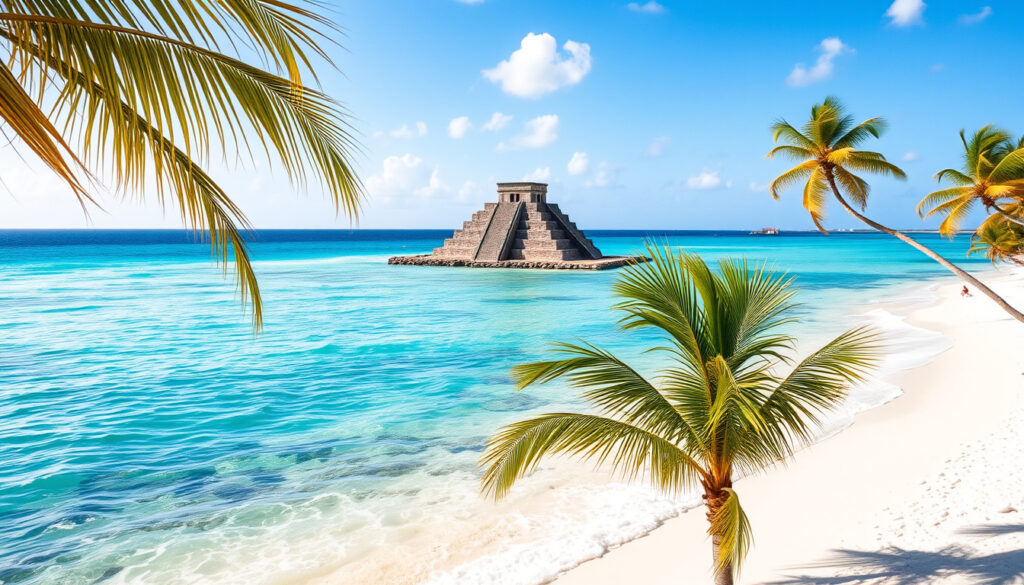
Things to Do in Cancun: Attractions, Tips & Itinerary
There’s a reason Cancun appears in more travel daydreams than most places on the planet. With its 22-kilometer Hotel Zone, Maya ruins a short drive away, and Caribbean water that looks almost artificial, it delivers on the visual promise. But practical questions — how long to stay, where to go, how much to tip — can trip up even seasoned travelers. Here’s what first-time visitors actually need to know.
Annual visitors to Cancun: Over 6 million · Length of Hotel Zone: Approximately 22 km · Average year-round temperature: 27°C (81°F) · Distance from Cancun to Chichen Itza: 200 km (2-hour drive)
Quick snapshot
- Nightlife at Coco Bongo (GetYourGuide (travel booking platform))
- Adult-only resort options along the Hotel Zone (GetYourGuide (travel booking platform))
- Golf courses near the Riviera Maya strip (GetYourGuide (travel booking platform))
- Romantic dinner on Isla Mujeres (20-minute ferry from Cancun)
- Sunset catamaran cruises along the coast
- Spa packages in the Hotel Zone resorts
- Xcaret and Xel-Ha eco-parks (GetYourGuide (travel booking platform))
- Swimming with dolphins at interactive aquariums (GetYourGuide (travel booking platform))
- Beach days at Playa Delfines (Machu Picchu Guide (travel resource))
- Public beaches along the Hotel Zone (GetYourGuide (travel booking platform))
- Mercado 28 souvenir shopping (GetYourGuide (travel booking platform))
- Cenote walks in the surrounding jungle (GetYourGuide (travel booking platform))
Cancun’s biggest advantage is how many different trip styles it serves in one destination. First-time visitors who pick a single zone — Hotel Zone for convenience, downtown for culture — will have a more coherent trip than those who try to cover all four cards in a long weekend.
| Category | Detail |
|---|---|
| Location | Northeastern coast of Yucatan Peninsula, Mexico |
| Main airport | Cancun International Airport (CUN) |
| Language | Spanish (English widely spoken in tourist zones) |
| Currency | Mexican Peso (MXN); US dollars accepted in many places |
| Time zone | EST (UTC-5) in winter, no daylight saving change |
Five quick-reference facts, one takeaway: Cancun is built for international tourists. English acceptance and dual-currency usage mean most visitors can skip the exchange counter — though paying in pesos almost always gets a better rate.
What should I not miss in Cancun?
Cancun’s attraction map is bigger than most first-timers realize. The mistake isn’t missing a single spot — it’s trying to do everything in two days and ending up exhausted in a cab. Prioritizing 3–4 anchor experiences changes the outcome entirely.
Chichen Itza and other Mayan ruins
- Chichen Itza is a UNESCO World Heritage Site and one of the Seven Wonders of the World (UNESCO World Heritage Centre) (New7Wonders Foundation).
- It is often used as a day-trip anchor from Cancun in multi-day itineraries, typically paired with a cenote stop (YouTube travel guide (Cancun itinerary)).
- The site sits about 200 km from Cancun — roughly a two-hour drive each way.
Isla Mujeres day trip
- Isla Mujeres is a 20-minute ferry ride from Cancun, making it one of the easiest day trips available.
- Visitors can combine shopping at Isla Shopping Village with the Interactive Aquarium and other family-oriented experiences (YouTube travel guide (Cancun attractions overview)).
Cenotes and natural swimming holes
- Cenotes like Cenote Ik Kil offer unique swimming experiences and are commonly paired with a Chichen Itza day trip (YouTube travel guide (Chichen Itza itinerary)).
- These limestone sinkholes are scattered throughout the Yucatan Peninsula and are a signature experience of the region.
Hotel Zone beaches
- Playa Delfines is one of Cancun’s best-known free public beaches and a recurring recommendation in Cancun itineraries (Machu Picchu Guide (travel resource)).
- Playa Tortugas is frequently presented as a calmer beach option with swimming and water activities (YouTube travel guide (Cancun attractions overview)).
- The Hotel Zone is the core area for beachfront resorts, nightlife, and tourist services (GetYourGuide (travel booking platform)).
Xcaret and eco-archaeological parks
- Xcaret Park combines culture, nature, and adventure in one large eco-park south of the Hotel Zone.
- Xel-Ha is a nearby water park focused on snorkeling and lagoon activities — both are marketed heavily through major booking platforms (GetYourGuide (travel booking platform)).
The pattern: Chichen Itza and a cenote is the classic one-two punch. Add one beach day and one park day, and you’ve covered Cancun’s core without rushing. Everything beyond that is a bonus.
Is 7 days in Cancun too much?
An average trip length suggested for Cancun is 4 to 6 days (GetYourGuide (travel booking platform)). A full week, however, opens up options that a long weekend simply can’t accommodate.
Sample 7-day Cancun itinerary
- Days 1–2: Arrive, settle in Hotel Zone, beach time at Playa Delfines or Playa Tortugas.
- Day 3: Chichen Itza + Cenote Ik Kil day trip.
- Day 4: Isla Mujeres ferry and island exploration.
- Day 5: Xcaret or Xel-Ha eco-park.
- Day 6: Downtown Cancun — Mercado 28, Parque de las Palapas (Machu Picchu Guide (travel resource)).
- Day 7: Relaxed morning, depart.
Best day trips from Cancun
- Day trips to Sian Ka’an biosphere reserve or Rio Secreto fit comfortably in a 7-day window.
- Valladolid, a colonial town near Chichen Itza, is a common lunch-and-walk stop.
Relaxation vs. adventure balance
- The Hotel Zone offers enough beach time and nightlife for a full week of relaxation.
- Nightlife at Coco Bongo is among Cancun’s most famous attractions (GetYourGuide (travel booking platform)).
- For adventure seekers, 7 days allows coverage of Tulum, Chichen Itza, and Isla Mujeres without cramming.
The trade-off: 7 days is too much if you’re looking for a quick beach escape and hate downtime. But for travelers who want variety — ruins, reefs, cenotes, and city — it’s the sweet spot. The real risk isn’t 7 days; it’s a loose itinerary that leaves you scrolling your phone by day 4.
What is the $20 trick in Cancun?
The $20 trick is a low-risk, high-reward negotiation tactic — but it works best at independent hotels with flexible upgrade policies. Large chain hotels in the Hotel Zone often have strict room assignments that front-desk staff cannot override regardless of a tip.
How the $20 trick works at hotels
- The $20 trick involves slipping a $20 bill when checking in to request a room upgrade — a practice documented in travel forums and visitor guides.
- Results vary by hotel policy and occupancy levels.
- It is reportedly more common at independent hotels than at major chains, where upgrade policies tend to be centralized.
Does it work at all-inclusive resorts?
- Whether the $20 trick works at specific all-inclusive chains remains unclear — success appears to depend on the front-desk agent’s discretion and current occupancy.
- At large chain properties, published upgrade pricing and loyalty status often override informal tips.
Pros and cons of trying it
Upsides
- Costs only $20 — if it works, the upgrade value is typically much higher.
- No downside beyond the lost $20 if the desk declines.
- Can yield ocean-view or suite upgrades at mid-range hotels.
Downsides
- No guarantee — the trick is a known practice but not a guaranteed method.
- May come across as awkward or pushy in cultures where tipping before service is uncommon.
- At chain hotels, front-desk staff may not have authority to grant upgrades.
The implication: $20 is a small gamble. Travelers who try it should do so with zero expectations and a friendly demeanor — the best-case scenario is a free upgrade, the worst case is a $20 lesson in how hotel occupancy works.
Is it better to stay in Tulum or Cancun?
Tulum and Cancun are only about 130 km apart, but they serve fundamentally different trip styles. Choosing between them is less about which is “better” and more about whether you want high-energy convenience or low-key bohemian charm.
Attractions and activities comparison
- Cancun has a lively Hotel Zone with many restaurants and clubs, anchored by Coco Bongo and the underwater museum (GetYourGuide (travel booking platform)).
- Tulum offers a bohemian vibe with ruins on a cliff and is commonly framed as a comparison destination for travelers seeking a more low-rise beach atmosphere (GetYourGuide (travel booking platform)).
Beach quality and atmosphere
- Cancun’s Hotel Zone beaches are wide, turquoise, and developed with amenities.
- Tulum’s beaches are narrower, more rustic, and lined with eco-chic hotels and palm-shaded sand.
Nightlife and dining
- Cancun’s nightlife is high-energy — mega-clubs, themed shows, and late-night party boats.
- Tulum’s nightlife is more subdued: beachfront bars, DJ sets at boutique hotels, dinner by candlelight.
Cost and accommodation options
- Cancun is generally more affordable for all-inclusive packages, especially in the Hotel Zone.
- Tulum has more cenotes and eco-friendly stays, but accommodation prices have risen sharply in recent years.
The pattern: Cancun wins on convenience, variety, and value for package travelers. Tulum wins on atmosphere, natural surroundings, and a slower pace. The two are complementary, not competitive — many 7-day itineraries split time between both.
| Aspect | Cancun | Tulum |
|---|---|---|
| Vibe | High-energy, resort-driven | Bohemian, eco-chic |
| Beach style | Wide, developed, turquoise | Narrower, rustic, palm-lined |
| Nightlife | Mega-clubs, party boats | Beach bars, low-key DJ sets |
| Cost | More affordable for all-inclusive | Higher for comparable quality |
| Best for | First-timers, families, partiers | Couples, wellness travelers, repeat visitors |
How much should you tip in Cancun?
Tipping in Cancun sits at the intersection of local custom and tourist expectation. Over-tipping is a waste of money; under-tipping can result in visibly poor service. The local norm is 10–20% at restaurants, but the trick is checking whether “propina” is already included on the bill.
Restaurant and bar tipping
- Cancun travel advice commonly includes tipping expectations for restaurants in the 10% to 15% range when service is good, with 20% recommended for exceptional or high-end dining (Island Life Mexico (Mexico travel guide)).
- Some Cancun restaurants automatically add a service charge, especially for large groups — travelers should check the bill for “propina” or “servicio incluido” before adding extra (Island Life Mexico (Mexico travel guide)).
- A common guideline for bartenders is roughly 20 to 40 pesos per round or per couple of drinks (Island Life Mexico (Mexico travel guide)).
Hotel staff tipping
- Hotel maids typically receive $2–5 per day, left in the room with a note.
- Porters expect $1–2 per bag for bringing luggage to the room.
- Concierge services that book reservations or tours warrant $5–10 depending on complexity.
Tour guides and drivers
- For organized excursions, one visitor guide recommends tipping tour guides around 10% to 15% of the tour cost for excellent service, or at least 100 to 200 pesos per person for a full-day tour (Island Life Mexico (Mexico travel guide)).
- Private drivers typically receive 10–15% of the fare or a flat 50–100 pesos for short trips.
Currency and recommended bill denominations
- Carry small peso bills (20, 50, 100 pesos) for daily tipping — many small vendors and drivers cannot break large notes.
- US dollars are widely accepted for tips but the exchange rate at point of transaction is rarely favorable to the tipper.
The pattern: tip in pesos, tip small, and always check the bill before adding extra. The “servicio incluido” line catches thousands of tourists every year who double-tip without realizing it.
Clarity check: what’s confirmed and what’s still unclear
Confirmed facts
- Chichen Itza is open to visitors year-round (UNESCO World Heritage Centre).
- Cancun has a tropical climate with high humidity year-round.
- The $20 trick is a known practice among travelers but not a guaranteed method.
- Playa Delfines is a free public beach accessible to all visitors (Machu Picchu Guide (travel resource)).
- Cancun’s peak travel season is December to April (GetYourGuide (travel booking platform)).
What’s unclear
- Whether the $20 trick works at specific all-inclusive chains — reports vary by property and front-desk discretion.
- Exact tipping amounts vary by establishment and service quality — no single standard applies across all Cancun restaurants and hotels.
- Customs restrictions on what visitors can bring back from Cancun may change; always check the latest official guidelines before departure.
- Whether 3 nights is enough to see Cancun’s main attractions depends heavily on itinerary density and travel pace.
- The actual success rate of the $20 trick has not been systematically documented — all evidence is anecdotal.
The catch: many practical details around tipping, customs, and the $20 trick live in a gray area. No official source tracks these practices, which means travelers should treat forum advice as anecdotal and always verify current policies with their hotel or airline.
Voices from travelers and guides
If you only do one day trip from Cancun, make it Chichen Itza and Valladolid. The ruin site is incredible, but the colonial town is where you actually feel Mexico.
— Travel blogger, YourFriendTheNomad
I slid a $20 bill with my credit card at check-in at a mid-range Hotel Zone hotel and got upgraded to an ocean-view suite on the spot. It doesn’t work every time, but when it does, it’s the best $20 you’ll spend in Cancun.
— Frequent visitor, Cancun travel forum
Planning your Cancun trip: a step-by-step guide
Most Cancun itineraries fail not because of bad choices but because of sequencing. Booking Chichen Itza for your arrival day, skipping the ferry ticket in advance, or forgetting small bills for tips — these logistics errors add up. A structured plan eliminates them.
Step 1: Choose your zone
- The Hotel Zone (Zona Hotelera) is a 22-km strip of beachfront resorts, restaurants, and nightlife — ideal for first-timers who want everything walkable or within a short taxi ride (GetYourGuide (travel booking platform)).
- Downtown Cancun (Centro) offers more authentic dining and shopping at lower prices, but requires taxis or buses to reach the beach.
Step 2: Decide your trip length
- 3 nights: tight but doable — pick either ruins + cenote OR Isla Mujeres + beach, not both.
- 5 nights: sweet spot — covers Chichen Itza, one beach day, one park or island trip.
- 7 nights: ideal for a split itinerary (e.g., 4 nights Cancun + 3 nights Tulum).
Step 3: Book anchor activities in advance
- Chichen Itza entry tickets and guided tours sell out during peak season (Dec–April) — booking at least a week ahead is recommended.
- Ferry tickets to Isla Mujeres can be purchased same-day at the dock, but pre-booking guarantees a spot during busy periods.
- Xcaret and Xel-Ha park tickets are cheaper online than at the gate.
Step 4: Prepare your cash and tipping kit
- Bring small peso denominations (20, 50, 100 pesos) — aim for at least 1000 pesos total for tips and incidentals.
- Keep a separate $20 bill in your wallet for the hotel upgrade trick if you plan to try it.
- Download a currency converter app — many vendors quote prices in dollars but give change in pesos at unfavorable rates.
Step 5: Check customs restrictions before packing
- Visitors cannot bring back fresh fruits, vegetables, or certain meats from Mexico.
- Limited quantities of alcohol and tobacco are allowed duty-free — check the latest limits on the official customs website before your return flight.
- Cenote water and sand are protected natural resources — removing them is prohibited and can result in fines.
After a day of exploring ancient ruins or swimming in cenotes, many visitors choose to base themselves at the Hilton Cancun Mar Caribe all-inclusive resort for its beachfront location and family-friendly amenities.
Frequently asked questions
Is 3 nights enough in Cancun?
3 nights is enough for a focused itinerary — one full day for Chichen Itza and a cenote, one for a beach day or Isla Mujeres, and a half-day to settle in. Travelers who want a relaxed pace or multiple day trips should aim for 5 nights minimum.
What can you not bring back from Cancun?
Fresh produce, certain meats, and plants are restricted. Limited quantities of alcohol (typically 1 liter per person) and tobacco are allowed duty-free. Cenote water, sand, and archaeological artifacts are strictly prohibited for removal — always check the latest U.S. Customs and Border Protection guidelines before your return.
What not to bring to Cancun?
Leave expensive jewelry and unnecessary electronics at home. Avoid bringing large-denomination US bills — many small vendors cannot break them. A money belt or hidden pouch is recommended over a visible wallet in crowded markets and bus stations.
Does the $20 trick work at all-inclusive resorts?
Reports are mixed. Some travelers report success at mid-range all-inclusive hotels, while others say large chains have strict upgrade policies that front-desk staff cannot override. Treat it as a low-stakes gamble — the worst outcome is a polite decline.
First time in Mexico, how much tip is appropriate?
For restaurants: 10–20% if service charge is not already included. For bars: 20–40 pesos per round. For hotel maids: $2–5 per day. For tour guides: 100–200 pesos per person for a full-day tour. Always use pesos for tipping, not coins.
Is $5 tip a lot in Mexico?
$5 USD (about 85–100 pesos) is a generous tip for most services in Cancun. It would be considered high for a single drink at a bar, reasonable for a full meal at a mid-range restaurant, and about average for a short taxi ride or half-day tour guide.
What are the best day trips from Cancun?
Chichen Itza (with or without a cenote stop) is the most popular day trip. Isla Mujeres via a 20-minute ferry is the easiest. Tulum ruins and the Sian Ka’an biosphere reserve are excellent for a full-day excursion. Valladolid makes a good lunch stop on the way back from Chichen Itza.
Few destinations reward advance planning as much as Cancun. The difference between a trip that feels like a vacation and one that feels like a checklist comes down to three things: picking the right zone for your style, booking your anchor activities ahead of peak season, and carrying small bills for tips. For the first-time visitor, the choice is clear: prioritize depth over breadth, tip in pesos, and leave at least one afternoon unplanned — that’s usually where the best memories show up.
More related posts
 Cal Foote: Career, Salary, Stanley Cup, and Legal Case
 Jack Hughes Teeth, Dating, LGBTQ Support & Career Facts
 Radio-Canada Estrie: Live TV, Radio & News Guide
 Golden Globes 2026 Winners: Full List & Ceremony Highlights
 Best Llajwa Salsa Near Me: Top Spots, Recipes & Tips
 Running Point Season 2 – Release Date, Cast and Trailer Details
 How Many Oceans Are There – Five Including the Southern Ocean