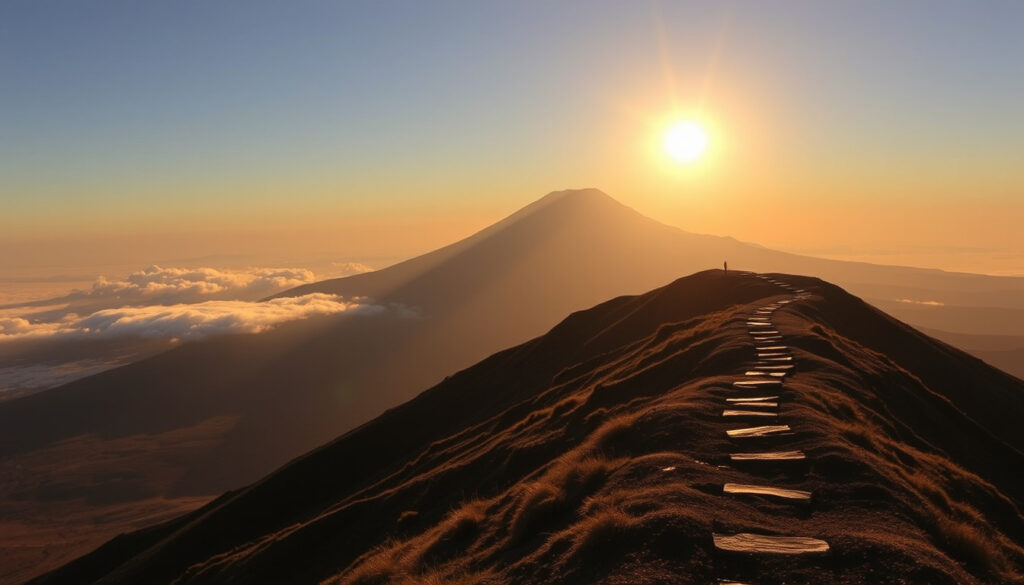
Mount Kilimanjaro: Facts, Risks, and Climbing Guide
Few places on Earth offer the kind of experience that Mount Kilimanjaro does: a trek to the roof of a continent without needing ropes, crampons, or bottled oxygen. Yet the same mountain that draws over 35,000 climbers each year also claims a handful of lives annually.
Height: 5,895 m (19,341 ft) ·
Location: Tanzania, Africa ·
First ascent: 1889 by Hans Meyer and Ludwig Purtscheller ·
Average climbing duration: 5–9 days ·
Summit success rate: ~65% ·
Annual deaths: 3–10 per year
Quick snapshot
- Africa’s highest mountain at 5,895 m (Altezza Travel trekking operator)
- Located in Tanzania near the Kenyan border (Climb Kilimanjaro Guide trekking resource)
- Exact annual death count fluctuates; estimates range from 3 to 10 per year (Ultimate Kilimanjaro safety resource)
- Success rate varies by route and season (Ultimate Kilimanjaro safety resource)
- Best climbing seasons: June–October and December–March (Follow Alice adventure travel company)
- More climbers are expected as tourism recovers; Kilimanjaro National Park raised permit fees in 2023 (Climb Kili trekking guide)
| Attribute | Value |
|---|---|
| Elevation | 5,895 m (19,341 ft) |
| Location | Tanzania, East Africa |
| First ascent | 1889 |
| Volcanic status | Dormant stratovolcano |
| Number of routes | 7 major routes |
| Annual visitors | ~35,000 |
Why is Mount Kilimanjaro so famous?
What makes Kilimanjaro special?
- It is the highest mountain in Africa, standing at 5,895 m (19,341 ft) according to Altezza Travel a leading trekking operator.
- It is the highest free-standing mountain above sea level in the world — no other peak rises from flat plains to such a height without being part of a range.
- Its three volcanic cones — Kibo, Mawenzi, and Shira — are remnants of a dormant stratovolcano (Climbing-Kilimanjaro.com route specialist).
- Kilimanjaro is a UNESCO World Heritage Site international designation.
- It attracts over 35,000 climbers annually, making it one of the most popular high-altitude treks on Earth.
The implication: Kilimanjaro’s fame isn’t just about height — it’s the rare combination of accessibility, dramatic geography, and a summit that feels achievable to a determined trekker.
In which country is Kilimanjaro?
Is Mount Kilimanjaro in Kenya or Tanzania?
Mount Kilimanjaro is located in Tanzania, near the northern border with Kenya. The summit lies entirely within Tanzanian territory, about 300 km south of the equator. The mountain is the centrepiece of Kilimanjaro National Park, a protected area that covers the entire mountain above the tree line.
The border with Kenya runs close to the eastern slopes, but the mountain itself is fully in Tanzania. This is a common point of confusion — the view from the Kenyan side is spectacular, but the summit is Tanzanian.
What continent is Mount Kilimanjaro on?
Kilimanjaro is on the African continent, in East Africa. It is the highest point in Africa, often called the “Roof of Africa.”
Why this matters: For travellers planning a climb, the country dictates visa requirements, which operators are licensed, and the logistics of getting there. Climbing without a licensed local guide is not permitted in Tanzania, as noted by Eco Africa Climbing Tanzania-based tour operator.
Is it safe to climb Kilimanjaro?
What are the risks of climbing Kilimanjaro?
“Altitude sickness is the main risk on Kilimanjaro, not technical difficulty.”
— Climb Kili safety guide
Altitude is the primary hazard. The mountain rises to 5,895 m, and acute mountain sickness can affect anyone above 2,500 m. Symptoms include headache, nausea, and dizziness; severe cases can lead to high-altitude pulmonary or cerebral oedema, which can be fatal. Follow Alice adventure travel company emphasises that poor acclimatisation increases the risk of mountain sickness.
How many deaths occur on Kilimanjaro?
Estimates vary, but the commonly cited range is 3 to 10 deaths per year. Ultimate Kilimanjaro safety resource reports approximately 1,000 evacuations annually, with deaths caused mainly by altitude sickness, heart issues, and trauma. The mortality rate is about 0.03% according to some calculations, though this figure is based on rough estimates and should be treated with caution.
What is the success rate?
More than 65% of climbers reach the summit. Success depends on route choice, itinerary length, and acclimatisation. Longer routes (7–9 days) have higher success rates than shorter ones. Climb Kili trekking guide notes that climbers using 7–8 day itineraries with structured medical oversight complete the climb safely.
Kilimanjaro is statistically safer than many high-altitude mountains, but the risk is real — and it’s almost entirely about altitude. Choose a longer itinerary and a reputable operator to stack the odds in your favour.
The trade-off: a shorter climb saves money but increases risk; a longer climb costs more but gives your body time to adapt.
Do you need oxygen in Kilimanjaro?
Can you climb Kilimanjaro without supplementary oxygen?
Yes. Supplementary oxygen is not required for climbing Kilimanjaro. The mountain is high enough to cause altitude sickness, but it is not at the extreme altitude of peaks like Everest, where the air is too thin to sustain life without supplemental oxygen. Most climbers use the “climb high, sleep low” method for acclimatisation, as recommended by Follow Alice adventure travel company.
What causes altitude sickness?
Altitude sickness occurs when the body does not have enough time to adjust to the lower oxygen levels at higher elevations. On Kilimanjaro, symptoms can begin above 2,500 m. Porters and guides carry emergency oxygen, but it is not for regular use — it’s reserved for medical emergencies.
“The mountain can be climbed without technical mountaineering skills, but altitude remains the main challenge.”
— Altezza Travel trekking operator
The catch: just because you don’t need bottled oxygen doesn’t mean you won’t feel the altitude. The lack of oxygen is the reason many climbers turn back.
What is harder, Everest or Kilimanjaro?
Everest is much harder by every measure. Climbing Everest requires technical mountaineering skills, including the use of ropes, crampons, and ice axes. It takes place in the “death zone” above 8,000 m, where supplementary oxygen is essential. The death rate on Everest is significantly higher than on Kilimanjaro.
Kilimanjaro, by contrast, is a non-technical trek — no ropes, no ice axes, no technical climbing required. The main challenge is altitude, not difficulty. That said, Kilimanjaro should not be underestimated; it is a serious high-altitude trek that demands physical fitness and mental preparation.
One trekking guide from Ian Taylor Trekking adventure blogger describes Kilimanjaro as “the world’s most accessible high-altitude trek” — a good introduction to altitude for those eyeing bigger peaks.
For a clearer picture, here’s how the two mountains stack up:
Six key differences, one pattern: Kilimanjaro is a walk-up, Everest is a full-scale expedition.
| Factor | Kilimanjaro | Everest |
|---|---|---|
| Height | 5,895 m (19,341 ft) | 8,849 m (29,032 ft) |
| Technical difficulty | Non-technical trek | Technical climbing (ropes, ice, crevasses) |
| Supplementary oxygen | Not required | Required above 8,000 m |
| Death rate | ~0.03% (estimated) | ~1% (summit attempts) |
| Duration | 5–9 days | 2 months |
| Cost | $2,000–$6,000 | $35,000–$100,000+ |
The implication: calling Kilimanjaro “easier” than Everest is true, but it’s like comparing a marathon to a triathlon — both are serious challenges, just different kinds.
Pros and Cons of Climbing Kilimanjaro
Upsides
- No technical climbing skills needed
- No supplementary oxygen required
- Relatively short commitment (5–9 days)
- High success rate with proper planning
- Stunning landscapes from rainforest to glacier
Downsides
- Altitude sickness is a real risk
- Physical fitness required — it’s a long, steep hike
- Costs $2,000+ for a guided climb
- Weather can be extreme (cold, wind, rain)
- Rescue and evacuation can be slow and expensive
How to Prepare for a Kilimanjaro Climb
- Choose your route wisely. The seven main routes vary in duration, difficulty, and scenery. The Marangu route is the shortest but has lower success rates; the Lemosho route offers better acclimatisation and higher summit chances. Climbing-Kilimanjaro.com route specialist provides detailed route comparisons.
- Train for endurance. Focus on cardio (hiking, running, cycling) and leg strength. Long uphill walks with a loaded backpack are ideal.
- Acclimatise effectively. Book a longer itinerary (7–9 days) and follow the “climb high, sleep low” principle. Avoid rapid ascents.
- Pack smart. Layered clothing, a good sleeping bag rated to -20°C, waterproof boots, and a headlamp are essential. Many operators provide a packing list.
- Book a licensed operator. Tanzanian law requires all climbers to be accompanied by a licensed guide. Choose a company with good safety records and experienced guides.
The single biggest factor in a safe and successful climb is the operator you choose — not your fitness level. A good operator ensures proper acclimatisation, emergency oxygen, and evacuation plans.
Confirmed Facts vs What’s Unclear
Confirmed facts
- Kilimanjaro is the highest mountain in Africa, at 5,895 m (Altezza Travel).
- It is located in Tanzania (Climb Kilimanjaro Guide).
- Supplementary oxygen is not needed for the climb (Follow Alice).
- Average summit success rate is around 65% (Climb Kili).
- About 3–10 climbers die per year (Ultimate Kilimanjaro).
What’s unclear
- Exact number of annual deaths fluctuates and depends on rescue definitions (Climb Kilimanjaro Guide).
- Success rate varies by route and season — no single authoritative study exists.
- Some sources report a height of 5,985 m, a discrepancy of 90 m (Follow Alice height comparison page).
- Mortality rate calculations are based on rough estimates, not official tallies (Climb Kilimanjaro Guide).
Quotes from the Experts
“The main cause of death on Kilimanjaro is altitude sickness, followed by heart issues and trauma.”
— Climb Kilimanjaro Guide (citing Tanzanian authority records)
“The mountain is safest when climbed with the right itinerary and operator.”
— Climb Kili (safety guide)
“Deaths are rare relative to the mountain’s large annual visitor volume.”
— Much Better Adventures (adventure travel magazine)
For a broader perspective on mountain travel, check out our Blue Mountain Guide: Canada, Australia & Jamaica – Where to Go.
Summary
Kilimanjaro is not a mountain to fear, but it is one to respect. The real risk is altitude, not technical difficulty, and the data shows that most climbers who prepare properly — with a long itinerary, a licensed operator, and physical training — make it to the summit. For the aspiring high-altitude trekker, the choice is clear: invest in a longer climb and a proven guide, or face the real possibility of turning back short of the roof of Africa.
Related reading: Blue Mountain Guide: Canada, Australia & Jamaica – Where to Go · Blue Mountain Guide: Canada, Australia & Jamaica – Where to Go
en.wikipedia.org, altezzatravel.com, zaratanzaniaadventures.com, muchbetteradventures.com, climbing-kilimanjaro.com
Frequently asked questions
How much does it cost to climb Mount Kilimanjaro?
Costs typically range from $2,000 to $6,000 depending on the route, operator, and duration. Budget-friendly options exist but may sacrifice safety standards.
What is the best time of year to climb Kilimanjaro?
The best seasons are June–October (dry) and December–March (warm). The long rains (March–May) and short rains (November) make trails muddy and reduce visibility.
Do I need a visa to climb Kilimanjaro?
Tanzania requires a tourist visa for most nationalities. You can obtain it on arrival or online before travel. Check with your local embassy for updates.
What should I pack for a Kilimanjaro climb?
Essentials include layered clothing, waterproof jacket and pants, insulated sleeping bag, trekking poles, water bottles, and a headlamp. Most operators provide a detailed packing list.
Are there age limits for climbing Kilimanjaro?
There is no official upper age limit, but climbers under 10 are generally not permitted. Many operators have a minimum age of 12. Older climbers should undergo a medical check.
Can I climb Kilimanjaro if I have asthma?
Asthma is not an automatic disqualifier, but you should consult your doctor. The cold, dry air and altitude can trigger attacks. Some operators require a medical clearance.
Is there mobile phone coverage on the mountain?
Coverage is available on most parts of the mountain, especially on the lower slopes. Data speeds are slow. Summit areas may have sporadic signal.
More related posts
 Teri Hatcher: Tragedy, Plastic Surgery Rumors & Net Worth
 Cast of Law & Order Toronto: Criminal Intent – Full Actors List
 7/11 Near Me: Store Locator, Map, Hours & Locations
 How Many Moons Does Saturn Have? 274 Moons & Counting
 Lee Jun-Ho: Relationship, Marriage, Children & Career Facts
 Jennifer Lawrence Biography: Health, Relationships, Career Facts
 Flea Musician: Nickname, Sobriety, Net Worth & More
 Aileen Wuornos: Verified Facts, Biography, and Latest Information